Check Dams for Change: Girganga Parivar’s Bold Step Towards Water Security
Jal Sammelan in Rajkot | 12 Tata Hitachi Machines Launched for Water Conservation
- Gujarat’s Water Revolution: Girganga Trust Inaugurates Mega Rainwater Project
- Girganga Trust’s 1,11,111 Check Dams and other Water Body Bodies Mission Takes Big Leap in Rajkot
- Union Jal Shakti Minister C.R. Patil and Energy Minister Kanubhai Desai Grace Grand Water Conservation Event in Rajkot
BILKULONLINE
Rajkot, Ahmedabad, July 08: Girganga Parivar Trust, a grassroots movement dedicated to water conservation, gave a major push to its mission of constructing 1,11,111 water conservation structures across Gujarat with a grand Jal Sammelan held at Paradise Hall, Kalavad Road.
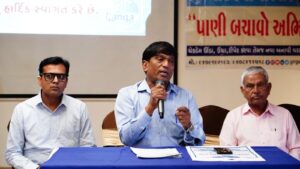
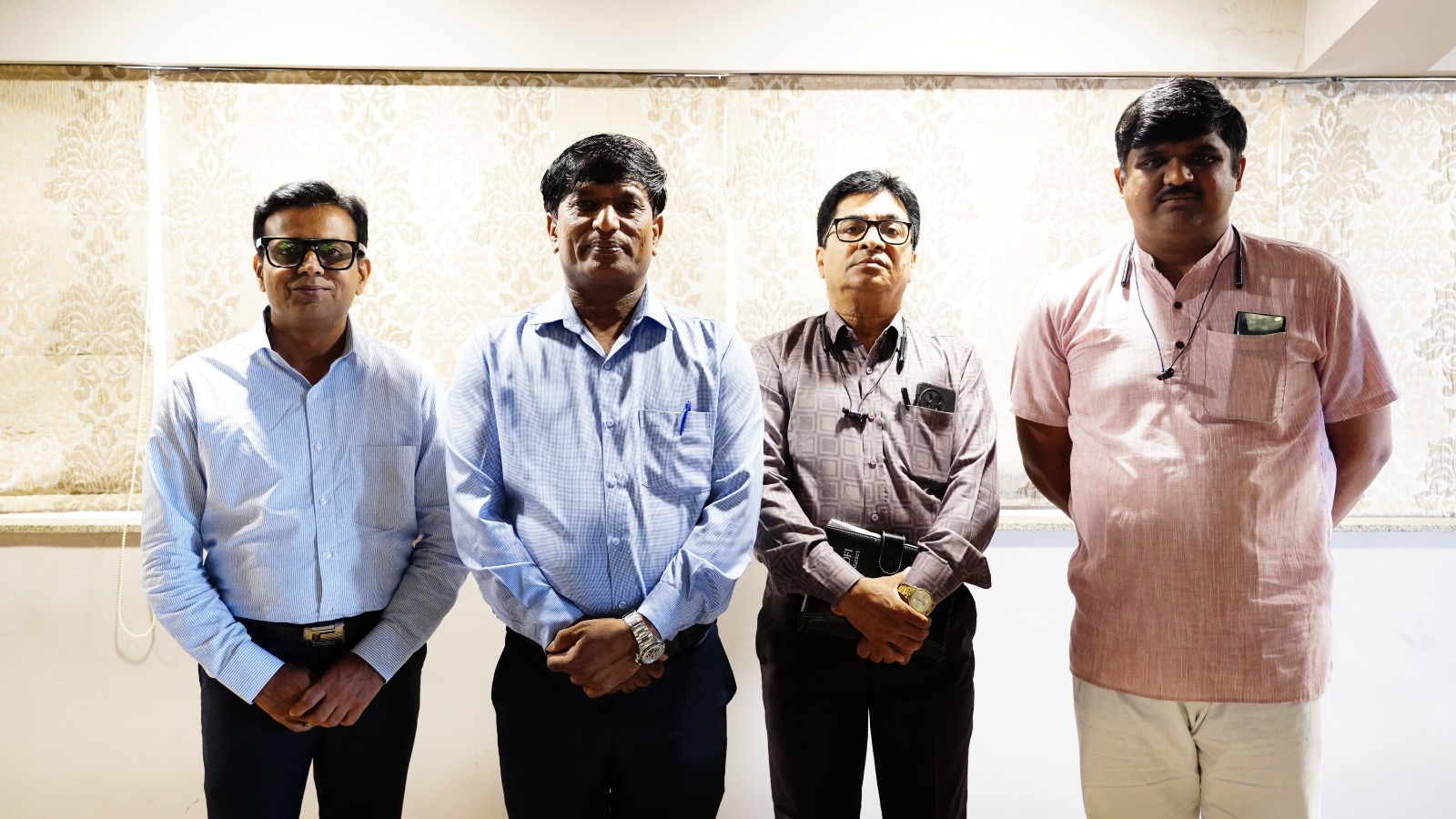
The event was marked by the presence of Union Jal Shakti Minister C R Patil and Gujarat Energy Minister Kanubhai Desai, who jointly celebrated the Trust’s resolve to ensure water security through people’s participation.
The Sammelan also witnessed the ceremonial inauguration of 12 state-of-the-art Tata Hitachi machines, generously gifted by Jetco, PGVCL, and UGVCL. These machines will be deployed immediately to deepen, restore, and build new check dams in water-stressed areas across the state.
“Our ancestors built stepwells and ponds to honour water; today, we build check dams to continue that legacy. In a region where rain falls fast and leaves faster, storing water means securing tomorrow.”
— Dilipbhai Sakhiya, President, Girganga Parivar Trust
Trust’s Work Already Impacting Thousands
So far, Girganga Parivar Trust, under the guidance of its president Dilipbhai Sakhiya, has completed over 8,000 check dam projects. These include deepening existing dams clogged with silt, strengthening broken ones, and building new structures where required. Each dam has helped recharge groundwater, support agriculture, and restore local ecosystems, offering drinking water and habitats for animals and birds alike.
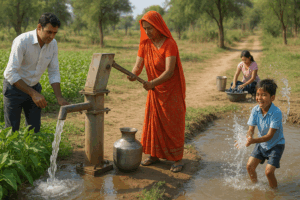
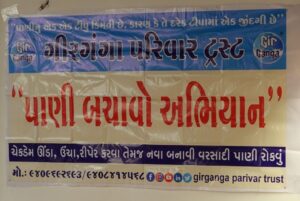
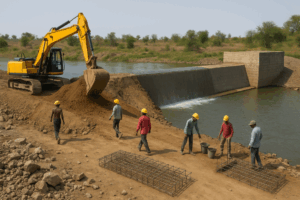
This movement echoes the vision of Prime Minister Narendra Modi, who has consistently advocated for “Jal Andolan” — water conservation through mass participation. The Trust’s approach has turned individual occasions like birthdays, anniversaries, and memorials into opportunities for legacy-based water donation, urging citizens to sponsor check dams in their native villages.
Overwhelming Support from Stakeholders
More than 1500 people, including industrialists, philanthropists, BJP leaders, engineers, and social workers attended the event. Blessings were shared by spiritual leader Paramatmanandji of Arsh Vidya Mandir. Senior officials like Additional Chief Secretary S J Haider, UGVCL MD N F Chaudhry, PGVCL MD K P Joshi, and JETCO MD Upendra Pandey extended their support to the initiative.
As a symbolic start to the next phase, the 12 Tata Hitachi machines were inaugurated to serve as tools of transformation in Saurashtra and beyond.
In Saurashtra, every drop of water is a blessing. Through check dams, we don’t just stop rainwater—we give it a home, let it seep into the earth, and return life to our farms and villages.
— Dilipbhai Sakhiya, President, Girganga Parivar Trust
The Deeper Message of Water
The Sammelan wasn’t just about machines and numbers — it was a reminder of the profound role of water in sustaining life. Speakers emphasized how Gujarat, a state often challenged by droughts and water scarcity, must lead by example in building resilient water infrastructure. Once lush riverbanks and ponds supported biodiversity and livelihoods — a reality that water conservation can help revive.
Water is not merely a resource; it’s the foundation of life. It is said that “the wars of the future will be fought not over land or oil, but over water.” Gujarat’s check dam movement is a peaceful, proactive answer to that looming challenge.
As C R Patil aptly noted during the event, “When people come together for water, they don’t just save the environment — they secure the future.”
The Girganga Parivar Trust’s campaign is not just about building structures. It’s about building awareness, responsibility, and a water-positive culture for generations to come.
Did You Know?
The average annual rainfall in Gujarat is around 850 mm
Agriculture Uses the Most Water
Around 70% of global freshwater is used for agriculture—mainly for irrigation of crops. This makes it the largest consumer of water worldwide.
Virtual Water in Products
Many products require large amounts of “virtual water” to produce. For example, producing one cotton shirt can use 2,700 liters of water—enough for one person to drink for 2.5 years!
Recycled Wastewater is Becoming Common
Several cities globally, like Singapore and Windhoek (Namibia), treat and reuse wastewater for drinking, industrial, and agricultural purposes—an efficient way to manage limited water resources.
Freshwater is Scarce Despite Abundance
Although 71% of Earth’s surface is water, only about 2.5% is freshwater, and less than 1% is accessible for human use—most of it is locked in glaciers or underground.
- Kindly Like the links below and Subscribe BILKULONLINE channel.
- https://youtube.com/shorts/j-VPSNZHy7U?feature=share
- https://youtu.be/g006uzke1co