Gujarat Detergent MSMEs Push for GST Cut and Policy Support
Association calls for 5% GST, subsidies, and simplified compliance to boost MSME growth, rural penetration, and India’s export potential
Bilkul Online | 1 Sept 2025 | Ahmedabad
By Rafat Quadri
The Gujarat Small Scale Detergent Manufacturers Association (GSSDMA), representing over 500 detergent and soap manufacturers across the state, has urged the Central Government to rationalise Goods and Services Tax (GST) and extend policy support to strengthen the industry in line with the “Make in India” and “Atmanirbhar Bharat” initiatives.
Industry Potential and Growth
According to Naresh Jain, Chairman of GSSDMA, the Indian detergent industry is valued at nearly ₹40,000 crore, growing at a compound annual growth rate (CAGR) of 7%. “With India being one of the largest consumer markets in the world, the detergent sector is strategically positioned to emerge as a global manufacturing hub. With the right policy measures, we can strengthen the industry’s contribution to employment, exports, and self-reliance,” Jain said.
The association noted that GSSDMA members include several well-known labels doing strong business in rural Gujarat, such as Hans, Nittal, Gita, Telephone, Super Pride, Poonam, and Aaj Kal.

Challenges Faced by MSMEs
GSSDMA highlighted that high GST rates, coupled with an inverted duty structure, are impacting the competitiveness and cash flow of MSME manufacturers. Currently, soaps and surface-active products under HSN 3401, and detergent powders, cakes, and liquids under HSN 3402, are taxed at 18%.
High import duties on critical raw materials such as linear alkyl benzene (LAB), fatty alcohols, surfactants, and packaging materials have further increased production costs. Compliance complexities and overlapping regulations are also creating operational hurdles for small-scale manufacturers.

Key Demands by the Association
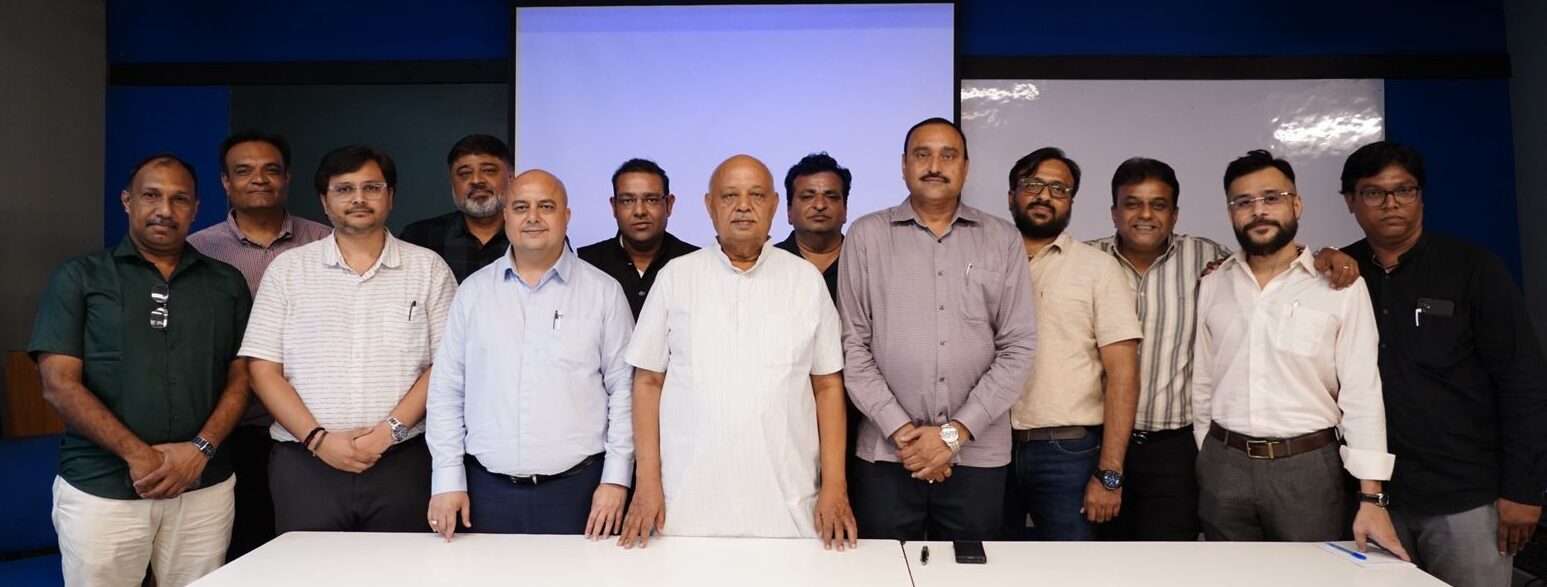
In a media interaction in Ahmedabad on Monday, Chairman of the GSSDMA Naresh Jain, along with Dipak Sutharia, Secretary, and other members including Nikunj Bhuptani, Rakesh Khoiwal, Alpesh Thakkar, Raju Sukhwani, Chintan Patel, Niraj Vyas, Vishal Maheshwari, and Pranav Salarkar, proposed the following measures to the Central Government:
- Reduction of GST from 18% to 5% on HSN 3401 and HSN 3402 products.
- Special subsidies and working capital support for MSME detergent manufacturers.
- Enhanced rebates under RoDTEP/SEZ schemes to boost exports.
- Introduction of a single-window clearance system to simplify compliance and reduce bureaucratic delays.
Jain emphasized, “Reducing GST to 5% could expand the industry’s size to over ₹1,00,000 crore, make quality detergents more affordable, and significantly improve rural penetration. This would enable MSMEs to offer eco-friendly products and generate large-scale employment opportunities in Gujarat, where more than 500 MSMEs already provide jobs to unskilled labour.”
A Call for National Policy Support
The association believes that with the right reforms, the sector’s CAGR growth could rise from 7% to over 10%. It urged the government to treat detergents and soaps not just as consumer goods, but as essential hygiene products that contribute to public health and social development.
Policy rationalisation, the statement concluded, could help the detergent industry cross ₹1,00,000 crore in turnover, strengthen India’s position as a global exporter, and deliver affordable, eco-friendly hygiene solutions to households nationwide.
(Rafat Quadri can be contacted at editorbilkul@gmail.com)
- Kindly Like the shared links and Subscribe BILKULONLINE channel.
- https://youtube.com/shorts/wUGfG0_e2yA?feature=share
- https://youtu.be/kxMVvYHSxoI