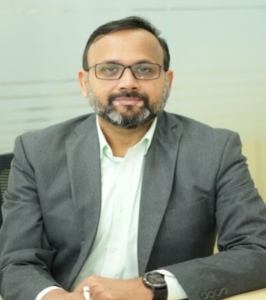
Gaurav Pandey, Co-Chairman, FICCI Committee on Urban Development and Real Estate, and Managing Director & CEO, Godrej Properties
” The Union Budget 2026 continues the strong focus on infrastructure-led growth, with a record INR 12.2 lakh crore capital expenditure and sustained emphasis on urban development, connectivity, and city-led growth. Measures such as the Infrastructure Risk Guarantee Fund, expansion of transport corridors, and support for city economic regions are positive for real estate demand over the medium term. The Government’s commitment to fiscal discipline and long-term growth creates a stable macroeconomic foundation, strengthening confidence across sectors and supporting sustained economic expansion.”
“We particularly welcome the MAT credit set-off being allowed up to 25% of the tax liability under the new tax regime. This move improves cash flows and makes the new tax regime smoother for companies with accumulated credits, freeing up capital for reinvestment into growth and consumption-led categories” –
Manoj Bhat, Managing Director & CEO of Mahindra Holidays & Resorts India Ltd
“The Union Budget 2026 reinforces the government’s intent to use tourism and hospitality as levers for balanced economic growth rather than treating them as standalone consumption sectors. The focus on destination development beyond metros, improved physical connectivity, and a sharper push on spiritual and heritage circuits reflects a recognition that tourism growth must be geographically distributed and locally rooted.
Equally important is the emphasis on skilling and workforce development. As the sector expands into tier two and three markets, the availability of trained talent will determine not just service quality but the sustainability of growth itself. By linking infrastructure creation with human capital development, the Budget moves the conversation from short-term demand creation to building a resilient, employment-generating tourism ecosystem.”
“Budget 2026 reassures the government’s continued focus on infrastructure-led growth and the importance of logistics as a key enabler of India’s trade competitiveness. At a time of global uncertainty, the record public capital expenditure of INR12.2 lakh crore and the emphasis on integrated connectivity through freight corridors, coastal shipping, inland waterways, and port-led development provide a stable and confidence-building signal for the sector.
Focused initiatives such as the Dankuni–Surat Dedicated Freight Corridor and the operationalisation of new national waterways strengthen multimodal connectivity, while investments in ship-repair ecosystems and high-speed rail corridors reflect a forward-looking approach to long-term infrastructure development.
The Finance Minister’s emphasis on keeping the ‘Reform Express’ firmly on track is clearly visible in these initiatives, as well as in the INR10,000 crore allocation for container manufacturing and the focus on sustainable cargo movement. From an industry perspective, these measures will significantly improve connectivity, reduce transit times, lower logistics costs, and enable Indian ports to operate with greater efficiency, reliability, and scale. The Budget’s focus on digitised, integrated customs processes and faster cargo clearances is a meaningful step towards improving ease of doing business. The expansion of AI-enabled, non-intrusive scanning across major ports will directly support faster cargo movement and lower transaction friction, translating into improved reliability and efficiency across the logistics chain for ports and trade.
At APM Terminals Pipavav, we see this as an opportunity to continue working closely with the government and stakeholders to support India’s evolving logistics and maritime ecosystem and contribute to India’s long-term economic growth.”
Vishwas Patel, Managing Director, AvenuesAI Ltd and Chairman Payments Council Of India
“With Zero MDR of UPI and the Government allocating a mere INR 2000 crores for processing 30 crore transactions every day for free will choke the entire ecosystem for funds for scaling and growth. We were expecting the government incentive to be above INR 10,000 crores. With these kinds of incentives for the fintech industry, it will be very difficult to get the next set of 300 million Indians on the Digital payments bandwagon as well as deploy acceptance mechanisms in the hinterland of our country. With increasing deployment and servicing costs as well as increasing RBI compliances costs, it will choke the growth. We don’t want to survive on government incentives. The only solution is for the government to allow us to charge a low controlled MDR of 30 BPS on UPI P2M transactions only for merchants with more than Rs. 20 lakhs turnover. The incentives can continue for smaller merchants by offering them Zero MDR. UPI P2P can continue be zero charges. There are approximately six crore merchants in India accept digital payments out of which 90 per cent are categorised as Small Merchants as per definition of RBI (turn over Rs. 20 L and below per annum), with around 50 lakh merchants categorized as large enterprises. Enabling MDR for Rupay Debit and UPI large merchants will ensure sustainable monetization for service providers without disrupting digital payment adoption at the grassroots level as the merchants already pay MDR for different payment systems. Why should the government incentivize us with taxpayers money for processing transactions for large merchants? UPI dominates as India’s most favourite payment option and every merchant will continue to offer UPI even by paying a mere 30 BPS as processing charges as they are anyways paying 2% for credit cards and other options.”.
Santosh Iyer, MD & CEO, Mercedes-Benz India.
“Budget’s strong focus on infrastructural development, with addition of Rs 1 lakh crore in capex, is a step in right direction developing the country’s evolving mobility ecosystem. Better highways and improved intercity connectivity have historically driven luxury car demand in India. The fiscal prudence reflected in the 4.3% deficit target, combined with strong focus on exports, sends a strong signal of macroeconomic stability, which may lead to a less volatile currency. Overall, the emphasis of the budget is on strengthening ease of doing business, and the deferral of customs duty payments up to 30 days, can improve cash flow significantly. This budget primarily focuses more on long-term gains, rather than immediate ones.”