


Early Screening and Bone Marrow Transplant Key to Tackling Gujarat’s Genetic Blood Disorder Burden
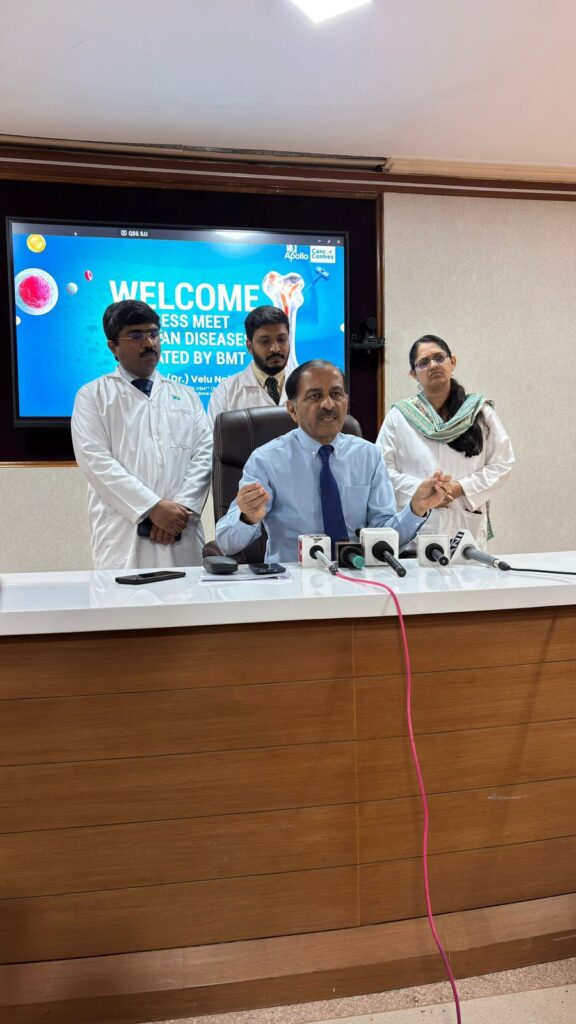
Bone Marrow Transplant Transforming Outcomes for Blood Disorder Patients: Lt. Gen. Dr. Velu Nair, Apollo Hospitals Ahmedabad
Early Screening and Bone Marrow Transplant Key to Tackling Gujarat’s Genetic Blood Disorder Burden
Bone Marrow Transplant Transforming Outcomes for Blood Disorder Patients: Lt. Gen. Dr. Velu Nair, Apollo Hospitals Ahmedabad
Gujarat Faces Significant Burden of Sickle Cell and Thalassemia; Experts Highlight Bone Marrow Transplant as a Curative Option
Gujarat continues to face a significant burden of inherited blood disorders, particularly sickle cell disease and thalassemia, highlighting the importance of early diagnosis and timely access to curative therapies.
According to data presented by the Ministry of Health and Family Welfare in the Lok Sabha, more than 77.34 lakh individuals have been screened for sickle cell disease in Gujarat up to July 28, 2025, with 28,178 confirmed cases identified. At the national level, over 33.44 lakh individuals were screened for thalassemia up to February 9, 2026, resulting in 11,274 thalassemia major cases and 94,542 carriers being detected.
Although the parliamentary data provides national figures for thalassemia, Gujarat has historically reported a considerable burden of the disorder, particularly in certain high-risk communities, adding to the state’s ongoing challenge of managing genetic haemoglobin disorders.
For many affected families, treatment often involves lifelong blood transfusions, iron chelation therapy, frequent hospital visits, and continuous monitoring. These long-term medical needs can significantly impact quality of life while creating emotional and financial strain for households.
Bone Marrow Transplant (BMT), also known as haematopoietic stem cell transplant, remains the only established curative treatment for thalassemia major and selected severe forms of sickle cell disease. In addition, BMT plays a key role in treating several serious blood-related conditions, including acute and chronic leukemias, lymphomas, and bone marrow failure syndromes that do not respond adequately to conventional treatment.
The procedure involves replacing defective or diseased bone marrow with healthy stem cells capable of producing normal blood cells. Advances in donor matching, conditioning regimens, infection control, and supportive care have significantly improved survival outcomes over the last decade, particularly when patients are referred early in the course of the disease.
Lt. Gen. Dr. Velu Nair (Retd), Haemato-Oncologist at Apollo Hospitals, Ahmedabad, said, “Bone Marrow Transplant has transformed the outlook for patients with serious blood disorders. For many children and young adults with thalassemia major, severe sickle cell disease, leukemias, or bone marrow failure syndromes, transplant offers the possibility of long-term disease control or cure. With early referral and appropriate donor selection, survival outcomes today are far better than what we saw a decade ago.”
He further added that cellular therapies such as CAR-T cell therapy (Chimeric Antigen Receptor T-cell therapy) have emerged as an important advancement for certain relapsed or refractory leukemias and lymphomas.
“CAR-T therapy represents a major step forward in precision immunotherapy, particularly for patients who have exhausted conventional treatment options. While not a replacement for transplant in all cases, it has shown encouraging response rates in selected patients,” he said.
The Bone Marrow Transplant and Cellular Therapy unit at Apollo Hospitals, Ahmedabad, has treated numerous patients with leukemias, lymphomas, inherited blood disorders, and rare bone marrow failure syndromes, including conditions such as Shwachman-Diamond Syndrome and Hyper IgD syndrome, reporting encouraging clinical outcomes.
Medical experts emphasize that early diagnosis through screening programmes, genetic counselling for at-risk families, and timely transplant evaluation can significantly improve outcomes. With Gujarat facing a measurable burden of inherited and acquired blood disorders, awareness about curative options such as Bone Marrow Transplant is considered essential to reducing long-term dependence on transfusions and chronic care.
Initiatives such as the “Zero to Hero” awareness campaign by Apollo Hospitals aim to promote early detection and encourage families to explore curative options like Bone Marrow Transplant at the appropriate stage of disease. Through improved awareness and expanded access to advanced care, healthcare providers hope to offer renewed hope to families affected by inherited and rare blood disorders.
Kindly Like the shared link and Subscribe our channel for such useful updates. https://youtube.com/shorts/DyiOsB5vTHQ?feature=share

