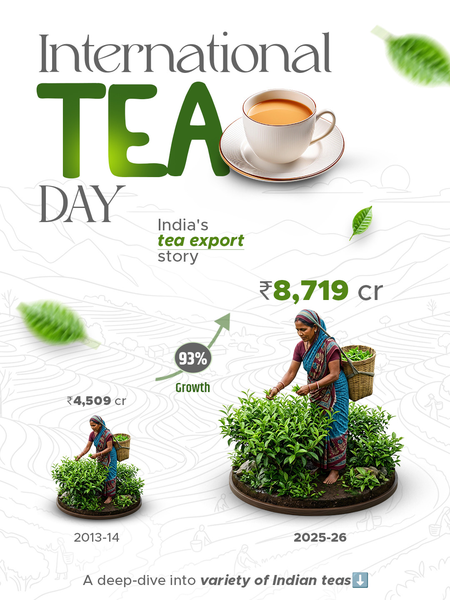
International Tea Day: The Story Brewing in Every Cup
- Bilkul Online | Special Story
- By Rafat Quadri
- 21 May 2026
From a steaming kulhad at a railway station to a delicate porcelain cup in a luxury lounge, tea is more than just a beverage — it is emotion, memory, conversation, and comfort. On International Tea Day, celebrated every year on May 21, the world pauses to honour one of humanity’s oldest and most loved drinks.
But tea is not merely about flavour. Behind every sip lies a fascinating journey of history, labour, culture, trade, and human connection.
The Origin of International Tea Day
International Tea Day was officially recognised by the United Nations in 2019 and is observed globally on May 21. The day aims to highlight the importance of tea in reducing poverty, supporting sustainable agriculture, and providing livelihoods to millions of workers, especially in developing countries.
Tea is one of the most consumed beverages in the world after water. Countries like India, China, Sri Lanka, Kenya, and Japan have built strong cultural identities around it. The day also brings attention to tea plantation workers whose lives are deeply tied to the industry.
Tea’s story dates back nearly 5,000 years. According to Chinese legend, Emperor Shen Nong accidentally discovered tea in 2737 BCE when tea leaves drifted into boiling water prepared for him. Fascinated by the aroma and taste, he drank it — and history changed forever.
From China, tea travelled across Asia and eventually to Europe through traders and explorers. Over centuries, it transformed from a royal luxury into a daily necessity.
India’s Tea Journey: From Colonial Crop to National Habit
India’s association with tea is both historical and emotional. Though wild tea plants existed in Assam for centuries, commercial tea cultivation began during British colonial rule in the 19th century.
The British East India Company wanted to challenge China’s dominance in tea trade. Assam’s climate proved perfect for tea cultivation, and plantations rapidly expanded across Assam, Darjeeling, Nilgiris, and Kangra.
Today, India is among the world’s largest tea producers and consumers. Indian tea varieties are globally celebrated:
- Assam Tea — strong, bold, and malty
- Darjeeling Tea — often called the “Champagne of Teas”
- Nilgiri Tea — fragrant and smooth
- Kashmiri Kahwa — aromatic with saffron and spices
- Masala Chai — India’s soul in a cup
Tea in India is not limited to drawing rooms. It lives in crowded bazaars, office breaks, political debates, train journeys, roadside stalls, and family kitchens.
The Taste That Changes with Every Region
One remarkable aspect of tea is how it adapts to local culture.
In Gujarat, tea is often sweet and milky. In Kolkata, clay cups called bhaars add earthy flavour. In Kashmir, pink noon chai and kahwa reflect regional traditions. In South India, strong “meter coffee-style” tea is theatrically poured between steel tumblers.
Some prefer ginger tea during monsoon rains. Others crave cardamom chai on winter mornings. Tea becomes personal — almost like a fingerprint.

The Human Stories Behind Tea
International Tea Day is also about people.
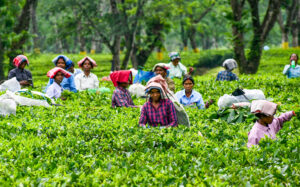
Millions of workers — many of them women — spend long hours plucking delicate tea leaves in estates across India and Asia. Their skill determines the flavour, aroma, and quality of the tea that reaches homes worldwide.
Tea gardens are not merely workplaces; they are living communities with stories of migration, struggle, resilience, and tradition. In regions like Assam and Darjeeling, generations of families have grown up surrounded by tea bushes and mist-covered plantations.
For countless Indians, tea sellers too represent hope and hard work. Small roadside tea stalls often become centres of friendship, local gossip, political discussions, and even business ideas.
More Than a Beverage
Tea has inspired poetry, cinema, literature, diplomacy, and revolutions. It calms nerves during stressful moments and strengthens bonds during celebrations.
A cup of tea can:
- Welcome a guest
- Begin a romance
- Heal homesickness
- Restart conversations after arguments
- Offer comfort during grief
Perhaps that is why tea remains timeless.
Brewing the Future
As the global tea industry evolves, conversations around sustainability, fair wages, organic farming, and climate change are becoming increasingly important. Rising temperatures and changing rainfall patterns are already affecting tea production in several regions.
Consumers today are also exploring healthier and artisanal teas — green tea, white tea, herbal infusions, and wellness blends.
Yet despite changing trends, one truth remains unchanged: tea continues to unite people across cultures and generations.
A Cup Full of Memories
International Tea Day is not just about celebrating a drink. It is about celebrating pauses in busy lives, conversations that matter, and the invisible hands that make every cup possible.
Because sometimes, the world’s greatest stories begin with two simple words:
“Chai piyoge?”