


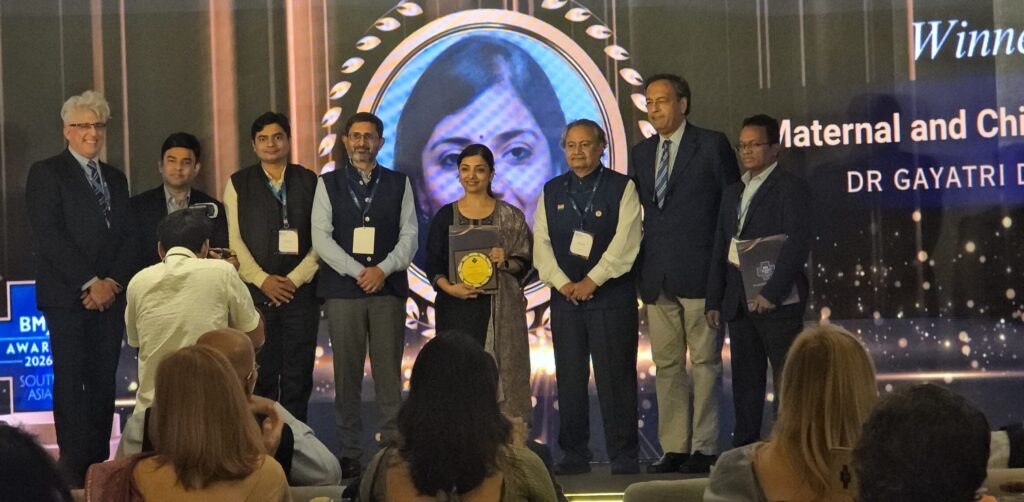
Gujarat-based organisation recognised for reducing maternal deaths by over 50% and stillbirths by 61% among pregnant women with sickle cell disease
- Bilkul Online
- Ahmedabad | 07 Sep 2026
Bharuch-based voluntary organisation SEWA Rural has won the BMJ Awards South Asia 2026 in the Healthcare Team category for its work to improve maternal healthcare for tribal women living with sickle cell disease (SCD).
Based in Jhagadia, Bharuch district, the Society for Education, Welfare and Action–Rural (SEWA Rural) was selected from more than 700 entries from across South Asia for a care model that has reported a more than 50% reduction in maternal mortality and a 61% decline in stillbirths among women with SCD.
The initiative is led by Dr Gayatri Desai, Medical Director and Head of the Department of Gynaecology at SEWA Rural. It focuses on identifying, monitoring and treating high-risk pregnancies among women with SCD, a severe inherited blood disorder that has a significant burden among tribal communities in several parts of India.
The BMJ Awards recognise individuals and healthcare teams for excellence in patient care, clinical practice, research and healthcare leadership across South Asia. The South Asia edition was launched in India in 2014, building on the legacy of the UK BMJ Awards.
A High-Risk Maternal Health Challenge
According to data cited by SEWA Rural, an estimated 17% of the tribal population in southern Gujarat carries the sickle cell trait, while nearly 1.5% of women delivering at healthcare facilities are estimated to have active SCD.
The scale of the challenge became evident when SEWA Rural assessed more than 10,500 tribal deliveries between 2016 and 2019. Nearly one in 10 deliveries resulted in stillbirth, while around 70% of babies had low birth weight. Women with SCD also required blood transfusions at substantially higher rates and faced a significantly higher risk of maternal death.
These findings prompted the organisation to strengthen its approach to detecting and managing SCD pregnancies.
Between 2016 and 2025, SEWA Rural screened around 35,000 deliveries and managed more than 700 high-risk pregnancies involving SCD at its hospital in Jhagadia.
Integrated Care Model
The organisation developed a dedicated care pathway combining obstetric and haematology services with standardised clinical protocols.
Depending on their risk level, women received targeted blood transfusions and referral support through government hospitals. In high-risk cases, the programme also incorporated structured second-trimester hydroxyurea therapy and prophylactic anticoagulation.
The results were significant. Maternal mortality fell by more than 50%, while stillbirths declined by 61%. Blood transfusion requirements also decreased, with the rate falling from 68.8 to 47.8 per 100 person-months.
Dr Gayatri Desai said the award demonstrates that specialised, evidence-based maternal healthcare can be delivered even in remote and resource-constrained settings.
“Historically, pregnant women with sickle cell disease in remote areas faced tragic outcomes due to late diagnosis and limited access to specialised care. This recognition by the British Medical Journal demonstrates that high-standard, evidence-based clinical care can be successfully adapted to rural, low-resource settings without relying on high-cost infrastructure,” she said.
Beyond Hospital Care
SEWA Rural’s approach has also extended beyond clinical treatment. The organisation worked with tribal families to co-design counselling strategies addressing stigma, fears surrounding screening and concerns about regular clinical follow-up.
The organisation said its experience demonstrates how specialised and compassionate maternal care can be integrated into rural health systems. It believes the model could be adapted and scaled to improve maternal and newborn outcomes among tribal women with sickle cell disease in other parts of India.
SEWA Rural (Society for Education, Welfare and Action–Rural) is a voluntary development organisation involved in health and development activities in rural tribal areas of the Jhagadia block in southern Gujarat since 1980. Its activities were initiated by professionals primarily from the health and education fields. The organisation draws inspiration from the ideals and ideas of Swami Vivekananda and Mahatma Gandhi.