


New Delhi
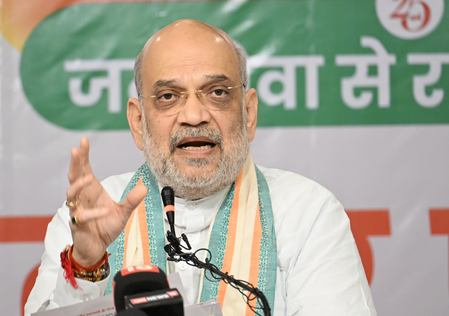
The debate over the Uniform Civil Code (UCC) intensified on Monday, a day after Union Home Minister Amit Shah announced that it would be implemented in all 21 states governed by the BJP-led NDA before 2029, with BJP leaders and the Vishwa Hindu Parishad (VHP) backing the move while some NDA partners and Muslim organisations called for wider consultations. BJP leaders strongly endorsed Shah’s announcement, arguing that a common set of laws was necessary for national unity and social reform.
BJP MP Naresh Bansal said Uttarakhand, his home state and the first in the country to enact a UCC law, had shown the way for other states. He described the legislation as necessary for the country and said it would help safeguard demographic balance. BJP West Bengal President Samik Bhattacharya said the party had consistently supported a UCC and asserted that there should be “one law in one country”. State Minister Dilip Ghosh also backed implementation, saying the process should begin in Bengal and subsequently extend to other states. BJP leader Mukhtar Abbas Naqvi said Shah’s announcement was in line with Article 44 of the Constitution, which directs the state to endeavour towards securing a Uniform Civil Code for citizens. Bihar Minister Ram Kripal Yadav also welcomed the move, saying the UCC should be implemented in BJP-ruled states before 2029. The VHP welcomed Shah’s announcement, with spokesperson Vinod Bansal saying implementation would be a milestone for women’s and children’s rights by addressing gender inequality and discrimination. He also appealed to non-BJP-ruled states to initiate the process.
However, the announcement has also exposed differing views within the NDA. Union Minister and Lok Janshakti Party-Ram Vilas leader Chirag Paswan called for the proposed UCC draft to first be made public and sought extensive consultations, pointing to India’s diverse customs, traditions and constitutional protections for tribal communities and special-category regions. Meanwhile, opposition-ruled Jharkhand Minister Sanjay Prasad Yadav too adopted a cautious approach, saying the state government would examine all aspects and there was no need to rush to conclusions. Opposition to the UCC also emerged from Muslim organisations.
The All India Muslim Personal Law Board opposed the proposed legislation, with Bhopal Shahar Qazi Mushtaq Ali Nadvi questioning its necessity in view of constitutional guarantees on religious freedom and minority rights. He appealed to people to participate in a September 17 protest at Jantar Mantar in New Delhi. Madhya Pradesh Congress chief Jitu Patwari criticised the BJP, alleging that the UCC was being used to divert attention from economic and social issues. The UCC seeks to establish a common framework governing personal matters such as marriage, divorce, inheritance and adoption irrespective of religious affiliation. Bills have been passed in Uttarakhand, Gujarat, Assam, and Madhya Pradesh, though the law is currently in force only in Uttarakhand.