


Indira Gandhi Remembered on 42nd Death Anniversary; Nation Pays Tribute to Her Legacy and Sacrifice
New Delhi | 31 Oct 2026
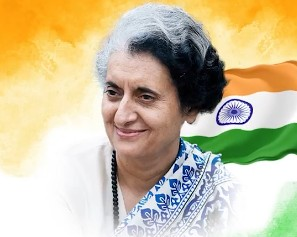
Indira Gandhi Remembered on 42nd Death Anniversary; Nation Pays Tribute to Her Legacy and Sacrifice
New Delhi | 31 Oct 2026
The nation on Saturday paid tribute to former Prime Minister Indira Gandhi on her 42nd death anniversary, remembering her contributions to India’s political, economic and social development, as well as her role in strengthening national unity and integrity.
Congress leaders, including party President Mallikarjun Kharge, Congress Parliamentary Party Chairperson Sonia Gandhi and Leader of Opposition in the Lok Sabha Rahul Gandhi, visited the Indira Gandhi Memorial at Shakti Sthal in New Delhi and offered floral tributes to the former Prime Minister.
Several Congress leaders across the country also remembered Indira Gandhi, highlighting her leadership, political contributions and sacrifice for the nation.
In Bengaluru, Karnataka Pradesh Congress Committee President B.K. Hariprasad described her as the ‘Iron Lady’ of India and said her sacrifice for the unity of the country would always be remembered.
“Indira Gandhi sacrificed her life for the unity of this country. Her great sacrifices will be remembered forever when we talk about the unity of India,” he said.
All India Mahila Congress President Alka Lamba recalled Indira Gandhi’s contribution to women’s political participation and her role in establishing the Mahila Congress. She said Indira Gandhi’s legacy continued to inspire women in public life.
Lamba expressed pride in leading an organisation founded by the former Prime Minister and noted that Indira Gandhi had encouraged women not merely to participate in politics but to take an active role in it.
Indian Youth Congress President Uday Bhanu Chib also paid tribute to the former Prime Minister, saying her contributions and sacrifice for the country continued to inspire the organisation.
Indira Gandhi was born on November 19, 1917, in Allahabad, Uttar Pradesh, to Jawaharlal Nehru, India’s first Prime Minister, and Kamala Nehru.
Serving as Prime Minister from 1966 to 1977 and again from 1980 until her assassination on October 31, 1984, Indira Gandhi played a significant role in shaping India’s political and economic journey.
Among her major contributions was her leadership during the 1971 India-Pakistan war, which resulted in the creation of Bangladesh. She also supported the expansion of the Green Revolution, helping India move towards greater food security and agricultural self-reliance.
Her tenure also witnessed India’s first peaceful nuclear test at Pokhran in 1974, advances in the country’s space programme and the nationalisation of 14 major commercial banks to expand access to credit for agriculture, small industries and rural development.
She also chaired the Non-Aligned Movement, strengthening India’s position as an influential voice among developing nations during the Cold War.
National Integration Day is observed every year on November 19, coinciding with her birth anniversary, to commemorate her contribution to national unity and integration. The observance was instituted by the Indian National Congress in 1985.