Ahmedabad Foundation Claims India’s First Dental Implant Placement in Scapula Free Flap for Black Fungus Survivor
Asian Head and Neck Cancer Foundation achieves a significant milestone in maxillofacial reconstruction; breakthrough offers new hope for patients who lost their upper jaw to mucormycosis during COVID-19
Bilkul Online
Ahmedabad | 17 Nov 2026
In a significant development in microvascular reconstructive surgery and dental implantology, the Ahmedabad-based Asian Head and Neck Cancer Foundation has announced what it claims to be India’s first achievement of placing dental implants in a transplanted scapula bone flap used to reconstruct the upper jaw of a patient who lost it due to mucormycosis, commonly known as black fungus.
The achievement marks an important step towards restoring not just the facial structure but also the oral functions of patients who have undergone extensive jaw removal following severe fungal infections.
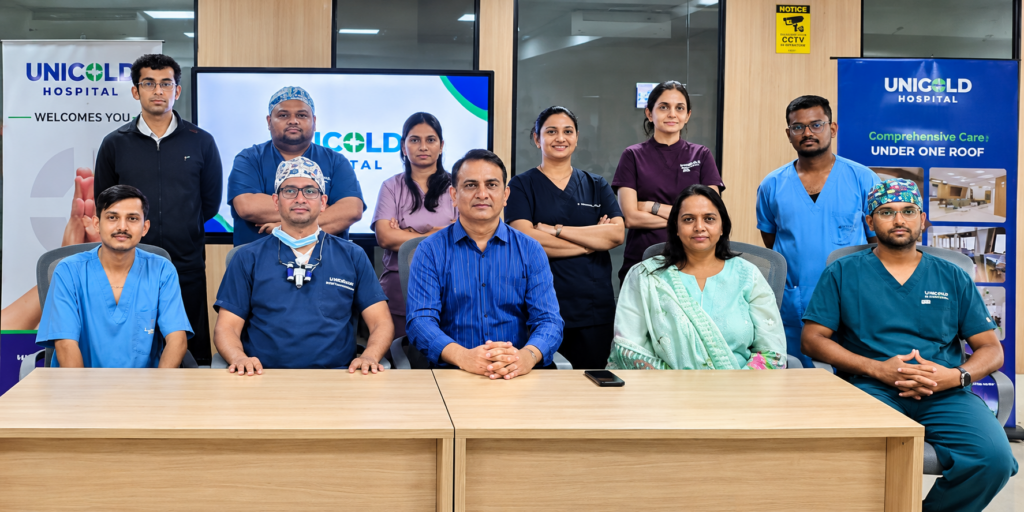
The complex microvascular reconstructive surgery was performed by Dr. Shakti Singh Deora and his surgical team, who reconstructed the patient’s upper jaw using a scapular free flap. Subsequently, Dr. Rahul Dhanak performed the dental implant placement in the reconstructed jaw.
According to the foundation, this combined approach opens up new possibilities for patients requiring functional and dental rehabilitation after losing a significant portion of their upper jaw.
Black Fungus: A Major Challenge During the COVID-19 Pandemic
Mucormycosis is a serious fungal infection caused by fungi belonging to the Mucorales group. Although these fungi are commonly found in the environment, they can cause severe infections in individuals with weakened immune systems, particularly those with uncontrolled diabetes.
India witnessed an alarming rise in mucormycosis cases during the second wave of COVID-19 in 2021. Factors associated with the increase included uncontrolled blood sugar levels, severe COVID-19 infection, compromised immunity and the use of corticosteroids in susceptible patients.
The infection commonly affects the nose and sinuses and can spread to the upper jaw, palate, eyes and surrounding facial tissues. In severe cases, it damages blood vessels, restricting blood supply to affected tissues and resulting in tissue death, medically known as necrosis.
Why Some Patients Lose Their Upper Jaw
When mucormycosis spreads extensively into the facial bones, particularly the upper jaw, antifungal medication alone may not be sufficient to control the infection. Surgical removal of infected and dead tissue becomes necessary to prevent further spread and save the patient’s life.
The removal of part or all of the upper jaw is known as a maxillectomy.
Although this procedure can be life-saving, it can leave patients with significant facial defects and functional difficulties. These include problems with chewing and swallowing, difficulty speaking clearly, leakage of food and liquids into the nose, loss of teeth and changes in facial appearance.
Many patients also experience psychological distress and reduced confidence because of the long-term impact on their appearance and social interactions.
Reconstructing the Upper Jaw: What Are the Available Options?
Modern maxillofacial and microvascular reconstructive surgery offers several approaches for patients who have lost a significant portion of their upper jaw.
Depending on the extent of the defect and the patient’s overall health, reconstruction may involve an obturator, surrounding tissues or bone transferred from another part of the body.
Among the established bone reconstruction techniques are:
Fibula Free Flap: Uses bone from the lower leg.
Iliac Crest Free Flap: Uses bone from the pelvic region.
Scapula Free Flap: Uses bone from the shoulder blade.
The choice of technique depends on the size and location of the defect, the amount of bone and soft tissue required, the patient’s medical condition and the possibility of future dental rehabilitation.
What Is a Scapula Free Flap?
A scapula free flap is an advanced microvascular reconstructive procedure in which bone, and sometimes associated muscles and soft tissues, are taken from the scapula or shoulder blade.
The harvested bone is carefully shaped to recreate the missing portion of the upper jaw. Its blood vessels are then connected to suitable blood vessels in the neck or face through delicate microsurgery.
This restores blood circulation to the transplanted tissue, allowing it to survive as living bone.
The technique is particularly useful in complex facial reconstruction because it can provide both bone and soft tissue, depending on the patient’s requirements.
In the present case, Dr. Shakti Singh Deora and his team used this technique to reconstruct the patient’s upper jaw, creating the foundation for subsequent dental implant rehabilitation.
Dental Implants in the Reconstructed Jaw: The Major Achievement
Reconstructing the missing jawbone is a major surgical accomplishment. However, restoring the patient’s ability to chew and use artificial teeth comfortably is another important challenge.
Traditional removable dentures may be difficult to stabilise in patients who have lost a substantial portion of their upper jaw, along with the natural bone and teeth that normally support them.
Dental implants offer an alternative by providing support for artificial teeth.
In this case, Dr. Rahul Dhanak placed dental implants directly into the living bone transferred from the scapula and used to reconstruct the upper jaw.
Implant placement in transplanted bone requires careful planning, taking into consideration the bone’s thickness, height, length, position, surrounding tissues and the alignment required for future artificial teeth.
Following successful integration of the implants with the bone, a biological process known as osseointegration, the implants can serve as a foundation for prosthetic teeth.
The combination of microvascular bone reconstruction and implant-based dental rehabilitation represents an important step towards restoring the patient’s oral function.
How Can Dental Implants Improve the Patient’s Quality of Life?
Dental implants placed in a successfully reconstructed jaw can offer several potential benefits:
Improved chewing ability: Implant-supported teeth can help patients chew food more effectively.
Better denture stability: Implants provide secure support for artificial teeth.
Greater comfort: Reduced movement of dentures can make eating and speaking more comfortable.
Improved oral function: Proper dental rehabilitation can help restore important everyday functions.
Enhanced confidence: Improved appearance and oral function can positively influence social interactions.
Better quality of life: The ability to eat, speak and smile more comfortably can support a patient’s return to normal activities.
The final outcomes depend on successful implant integration, appropriate prosthetic rehabilitation and regular follow-up.
Multidisciplinary Expertise Behind the Achievement
The achievement highlights the importance of collaboration between specialists in microvascular reconstructive surgery, maxillofacial surgery and dental implantology.
While Dr. Shakti Singh Deora and his surgical team undertook the challenging task of rebuilding the upper jaw using a scapular free flap, Dr. Rahul Dhanak subsequently placed dental implants in the reconstructed bone.
This coordinated approach demonstrates how modern reconstructive procedures are increasingly focused not only on replacing lost tissues but also on restoring their functional capabilities.
Beyond Survival: Restoring the Ability to Eat, Speak and Smile
For patients who survived severe mucormycosis during the COVID-19 pandemic, the removal of the upper jaw often marked the beginning of a long journey of physical, functional and emotional rehabilitation.
Restoring facial structure, enabling proper chewing, improving speech and helping patients regain confidence remain important aspects of their recovery.
The achievement announced by the Ahmedabad-based Asian Head and Neck Cancer Foundation highlights the growing capabilities of Indian medical specialists in advanced maxillofacial reconstruction and dental implantology.
By combining living bone reconstruction with dental implant placement, the procedure offers renewed hope to patients who have lost a part of their facial structure to life-threatening infections.
Ultimately, the objective of reconstructive surgery extends beyond saving lives. It is also about helping survivors regain their ability to eat, speak, smile and lead a life with dignity and confidence.
Dr. Rahul Dhanak performed the dental implant placement in the transplanted scapular bone, marking a significant step towards the patient’s functional and dental rehabilitation. The complex microvascular reconstructive surgery to rebuild the patient’s upper jaw using a scapular free flap was performed by Dr. Shakti Singh Deora and his surgical team. The procedure involved transferring living bone and associated blood vessels from the shoulder blade and carefully connecting them to blood vessels in the facial or neck region to restore blood circulation to the reconstructed jaw.
Dr. Dhanak’s implant procedure required meticulous planning and precision to ensure appropriate implant positioning and provide a stable foundation for future prosthetic teeth. The combined expertise of Dr. Dhanak, Dr. Deora and the surgical team represents an important multidisciplinary achievement, taking the patient’s treatment beyond structural reconstruction towards restoring chewing ability, oral function and quality of life.