
The Great Indians: M. S. Subbulakshmi
- Bilkul Online | Sunday Special
- By Rafat Quadri (Editor)
M. S. Subbulakshmi – The Voice That Made India Sing
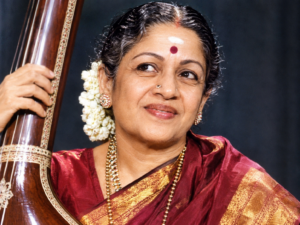
Madurai Shanmukhavadivu Subbulakshmi (1916–2004) was one of India’s most celebrated classical vocalists. Revered as MS Amma, she was much more than a musician: she was a cultural ambassador whose extraordinary voice carried the beauty of Indian classical music across the world.
Her music transcended language, religion and geographical boundaries. From Carnatic compositions to devotional bhajans, she touched millions of hearts and earned a permanent place in India’s cultural history.
Her remarkable journey
Early life and musical beginnings
Born on September 16, 1916, in Madurai, Tamil Nadu, Subbulakshmi grew up in a family steeped in music. Her mother, Shanmukhavadivu, was a renowned veena player who introduced her to the world of classical music.
Her talent became evident at a remarkably young age. She gave her first public performance as a child and, by her teenage years, had already established herself as an exceptional Carnatic vocalist.
Awards and recognition
| Year | Honour |
| 1954 | Padma Bhushan |
| 1968 | Sangita Kalanidhi |
| 1974 | Ramon Magsaysay Award |
| 1975 | Padma Vibhushan |
| 1990 | Indira Gandhi Award for National Integration |
| 1998 | Bharat Ratna |
Some of her most cherished renditions include:
- Suprabhatam – a devotional awakening hymn associated with Tirupati.
- Bhaja Govindam – a timeless spiritual composition.
- Vishnu Sahasranamam – devotional chanting of the thousand names of Lord Vishnu.
- Hari Tum Haro – the Meera bhajan she recorded at Mahatma Gandhi’s request in 1947.
- Maitreem Bhajata – the Sanskrit composition she performed at the United Nations in 1966.
Her rendition of Suprabhatam continues to be played at the Tirumala temple.
Why does she deserve to be remembered as one of India’s greatest?
M.S. Subbulakshmi did something extraordinary. She took a deeply rooted Indian classical musical tradition and made it accessible to audiences across the world.
She represented India’s cultural identity with dignity, simplicity and grace. Her life demonstrated that music is not merely entertainment; it can also be a medium of devotion, peace, compassion and national pride.
She passed away on December 11, 2004, but her voice continues to live in millions of hearts.
Note: We seek Sponsors for this column. Please connect with us at infobilkul@gmail.com