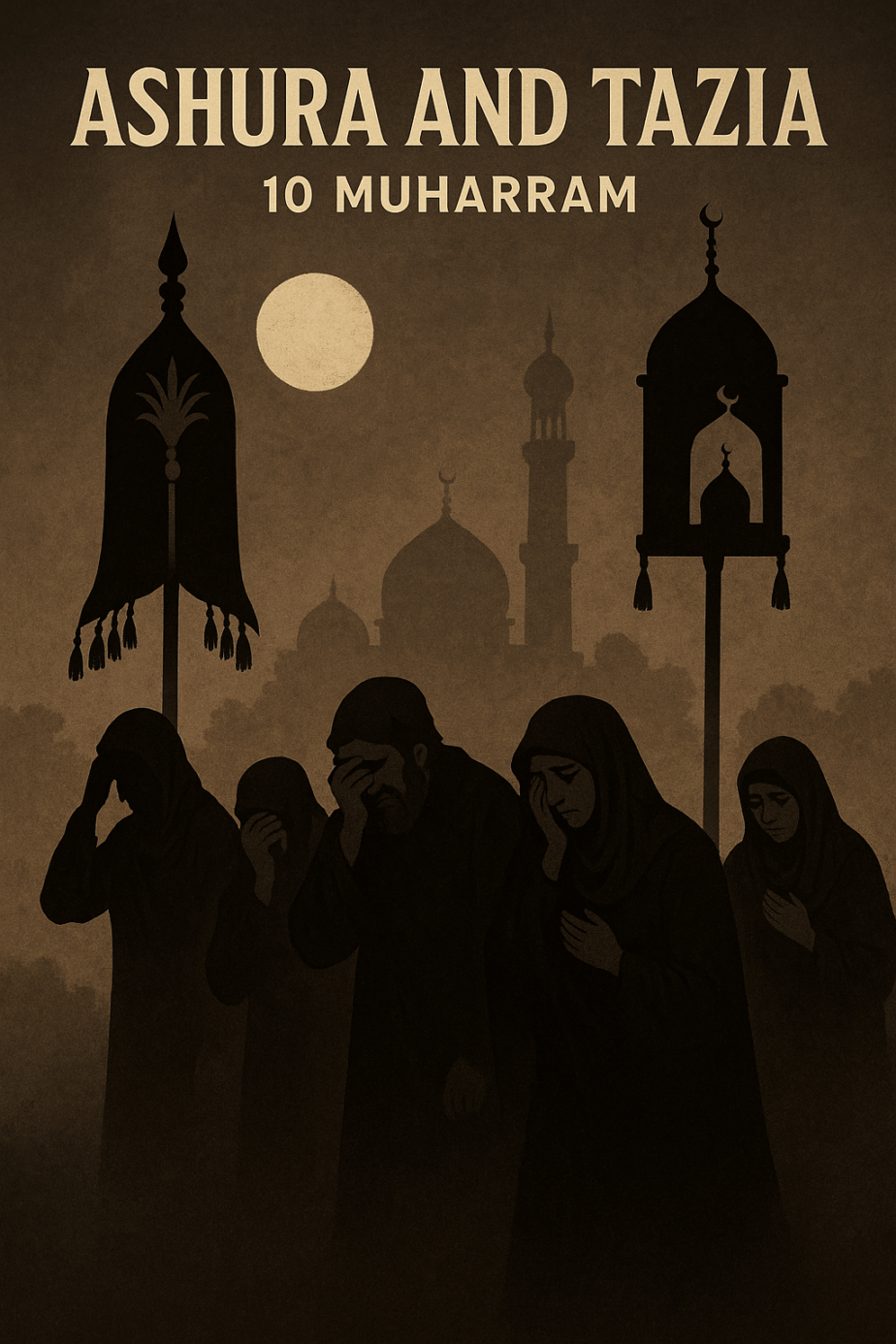
Remembering Sacrifice: The Significance of Muharram and the Tazia Tradition
A Timeless Tribute to Courage and Compassion: Understanding the Spirit of Muharram and the Tazia Procession
- BILKULONLINE
- OCCASION/FESTIVAL Special
Every year, millions of people around the world mark the Islamic month of Muharram with deep reverence and solemnity. The 10th day of Muharram, known as Ashura, holds particular significance for Muslims, especially for Shia Muslims. It commemorates the martyrdom of Imam Hussain, the grandson of Prophet Muhammad, at the Battle of Karbala in 680 AD.
Imam Hussain stood against tyranny and injustice, choosing death over submission to an oppressive ruler. His sacrifice, along with that of his family and companions, has become a symbol of courage, faith, and resistance against wrong.
A deeply rooted tradition observed during Muharram is the Tazia procession. Tazias are beautifully crafted replicas of Imam Hussain’s tomb, often made of wood, paper, and decorative materials. These symbolic structures are carried through the streets accompanied by mournful chants, drums, and recitations of elegies (called marsiyas and nohas). The procession is both a tribute and a collective expression of grief.
In many parts of India, the Tazia tradition goes beyond religious boundaries, with Hindus and Muslims often participating together—a touching example of cultural unity. In towns and cities, one can see young boys carrying small Tazias while elders recall tales of bravery and sacrifice.
Some devotees engage in matam—a ritual of chest beating or self-flagellation—as a physical manifestation of mourning. Others choose quieter forms of remembrance, such as distributing food and water, reciting prayers, or hosting gatherings (majlis) to reflect on the values Hussain stood for.
While the rituals may differ, the heart of Muharram remains the same: a remembrance of sacrifice, a stand for justice, and an enduring message of humanity. For observers and onlookers alike, it serves as a reminder that standing up for what is right often demands immense courage—and that such acts can echo through history for generations.
In a time when the world struggles with divisions, the message of Muharram—and the visual poetry of the Tazia—offers a powerful call for unity, reflection, and compassion.