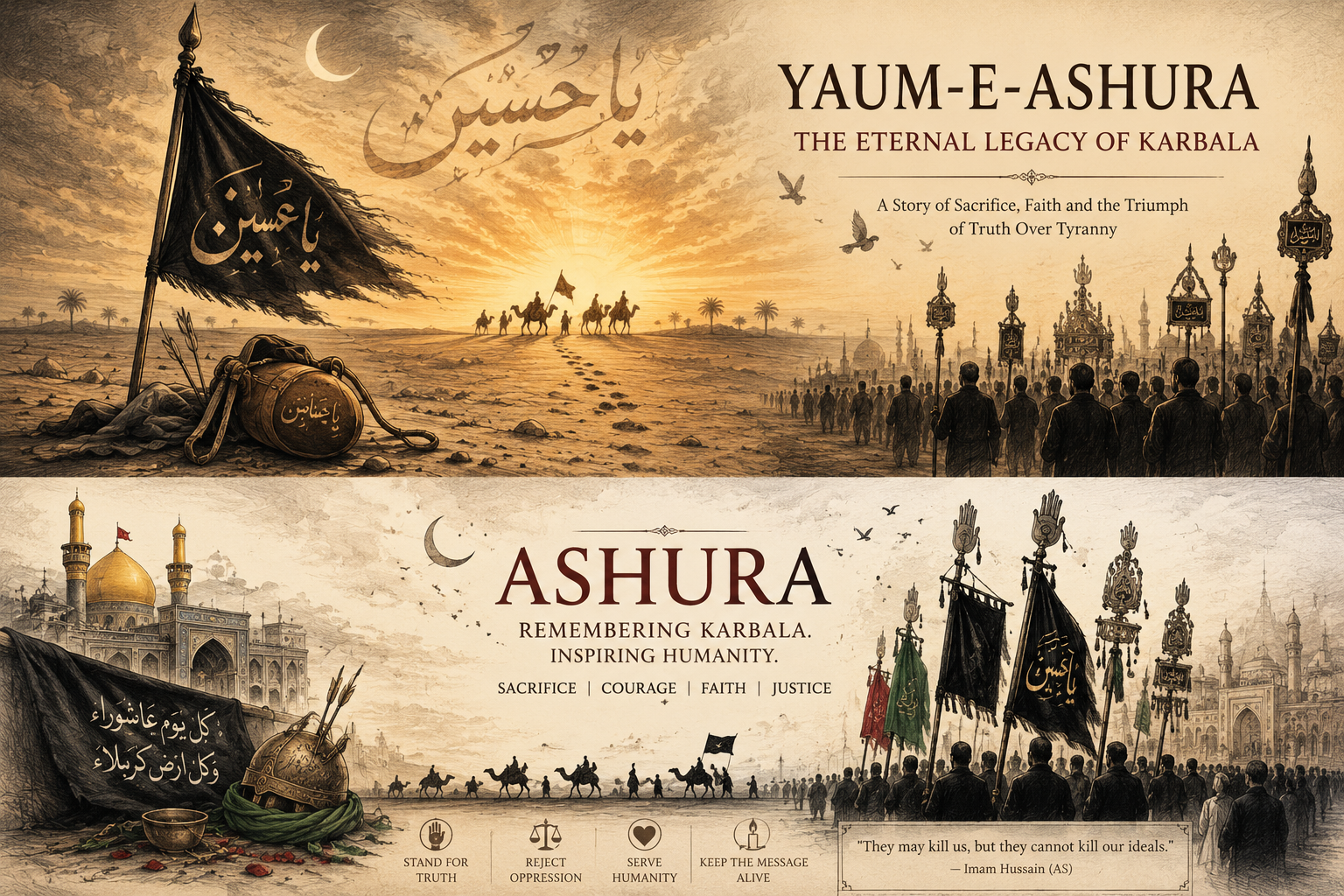
Yaum-e-Ashura: The Enduring Legacy of Karbala and the Triumph of Truth Over Tyranny
Yaum-e-Ashura: A Day That Changed History
From Karbala to the World: The Enduring Message of Ashura
The story of Imam Hussain, the martyrs of Karbala, and why millions across continents commemorate their sacrifice every Muharram
- Bilkul Online | Occasion Special
- By Rafat Quadri
Muharram, the first month of the Islamic calendar, is among the four sacred months in Islam. At its heart lies the 10th day of Muharram, known as Yaum-e-Ashura, a day of profound spiritual, historical, and emotional significance for Muslims across the world.
For Sunni Muslims, Ashura is associated with several important events in Islamic tradition, including the day when Prophet Musa (Moses) and his followers were saved from the oppression of Pharaoh. Prophet Muhammad (PBUH) observed fasting on this day and encouraged his followers to do the same as an expression of gratitude to Allah.
For Shia Muslims, however, Ashura is the solemn commemoration of one of the most defining moments in Islamic history—the martyrdom of Imam Hussain ibn Ali (AS), the beloved grandson of Prophet Muhammad (PBUH), at the Battle of Karbala in 680 CE. His sacrifice transformed Ashura into a timeless symbol of resistance against injustice, oppression, and tyranny.
The Battle of Karbala
The events leading to Karbala began when Imam Hussain refused to pledge allegiance to Yazid ibn Muawiyah, the Umayyad ruler whom he considered unjust and unfit to lead the Muslim community. Choosing principle over power and conscience over compromise, Imam Hussain embarked on a journey that would culminate in one of history’s most poignant acts of sacrifice.

On the plains of Karbala, in present-day Iraq, Imam Hussain and a small group of family members and loyal companions faced an army numbering in the thousands. Surrounded, denied access to water, and subjected to immense hardship, they remained steadfast in their commitment to truth and justice.
On the 10th of Muharram, Imam Hussain, along with his companions and family members, attained martyrdom. Though militarily defeated, their moral victory ensured that the principles they stood for would inspire generations to come.
Heroes of Karbala
The story of Karbala is not only the story of Imam Hussain but also of the extraordinary men, women, and children whose courage and devotion became immortal.
Imam Hussain ibn Ali (AS)
The central figure of Karbala, Imam Hussain chose martyrdom rather than submit to what he believed was an unjust authority. His unwavering commitment to justice and truth made him one of history’s most revered figures.
Hazrat Abbas ibn Ali (AS)
Known as the standard-bearer of Imam Hussain’s camp, Hazrat Abbas is remembered for his unmatched loyalty and bravery. His attempt to fetch water for the thirsty children of Karbala despite overwhelming danger remains one of the most moving episodes of the tragedy.
Ali Akbar ibn Hussain (AS)
The eldest son of Imam Hussain, Ali Akbar was renowned for his noble character and striking resemblance to Prophet Muhammad (PBUH). He displayed immense courage before attaining martyrdom.
Qasim ibn Hasan (AS)
The young son of Imam Hasan and nephew of Imam Hussain became a symbol of youthful sacrifice and devotion. Despite his tender age, he willingly joined the struggle for truth.
Ali Asghar (AS)
The six-month-old infant son of Imam Hussain became one of Karbala’s most poignant symbols. His martyrdom highlighted the brutality faced by Imam Hussain’s family and deepened the tragedy’s emotional impact.
Habib ibn Muzahir and Muslim ibn Awsaja
Among Imam Hussain’s loyal companions, these elderly warriors exemplified steadfast faith and commitment. They stood by the Imam until their final breath.
Hurr ibn Yazid al-Riyahi
Originally part of Yazid’s forces, Hurr experienced a profound change of heart on the day of Ashura. He joined Imam Hussain’s camp and sacrificed his life in defense of the truth, becoming a powerful symbol of repentance and moral courage.
Lady Zaynab bint Ali (AS)
Though not a combatant, Lady Zaynab emerged as one of Karbala’s greatest heroes. Following the battle, she fearlessly challenged tyranny through her speeches in Kufa and Damascus, ensuring that the message of Karbala would never be forgotten.
Imam Ali Zayn al-Abidin (AS)
The surviving son of Imam Hussain, who was ill during the battle, played a vital role in preserving and transmitting the legacy of Karbala for future generations.
The Universal Message of Ashura
More than thirteen centuries later, the message of Karbala continues to resonate far beyond religious and geographical boundaries. The sacrifice of Imam Hussain represents the eternal struggle between truth and falsehood, justice and oppression, morality and corruption.
Ashura reminds humanity that principles are worth defending even in the face of overwhelming odds. It teaches courage, patience, compassion, dignity, and unwavering faith.
Ashura Observances in India
India hosts some of the world’s largest Muharram commemorations outside the Middle East. Across cities such as Lucknow, Hyderabad, Mumbai, Kolkata, Ahmedabad, and Srinagar, millions participate in mourning ceremonies, processions, and religious gatherings.
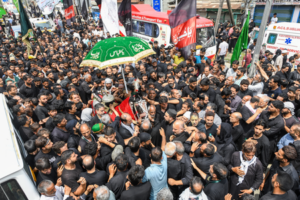
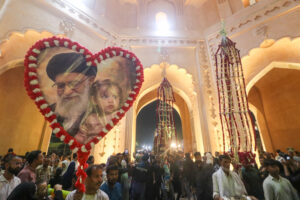
The observances include Majlis (religious assemblies), recitation of marsiyas and nohas, distribution of food and water, and processions featuring Tazias—symbolic replicas of the shrine of Imam Hussain in Karbala. Black attire is commonly worn as a mark of mourning and remembrance.
Lucknow, in particular, is regarded as a major center of Shia culture in India and is renowned for its elaborate Muharram observances that attract participants from across the country.
In many parts of India, people from different faiths also participate in Muharram processions, reflecting the shared respect for Imam Hussain’s stand against injustice.
Ashura in Iran
Ashura occupies a central place in the religious and cultural life of Iran. The first ten days of Muharram witness large-scale mourning ceremonies culminating on Ashura.
Cities such as Tehran, Mashhad, Qom, and Isfahan host massive gatherings, processions, and traditional passion plays known as Ta’zieh, which reenact the events of Karbala. Communities organize charitable activities and distribute food in memory of Imam Hussain and his companions.
Ashura Around the World
The remembrance of Karbala extends across continents. Millions gather annually in Karbala, Iraq, where the shrine of Imam Hussain stands as one of Islam’s most revered sites.
Significant Ashura commemorations are also held in Pakistan, Lebanon, Bahrain, Saudi Arabia, Turkey, the United Kingdom, the United States, Canada, and numerous other countries, reflecting the global reach of Imam Hussain’s message.
A Legacy That Endures
Yaum-e-Ashura is not merely a remembrance of a historical battle. It is a living testament to the power of conviction and the enduring human quest for justice.
The heroes of Karbala did not achieve a military victory, but they secured something far greater—a moral triumph that continues to inspire millions around the world. Their sacrifice serves as a reminder that truth may be challenged, but it can never be extinguished.
As generations continue to commemorate Ashura, the message of Imam Hussain remains as relevant today as it was on the plains of Karbala: that dignity, faith, and justice are worth every sacrifice.
“Every day is Ashura and every land is Karbala” remains a powerful expression of the timeless relevance of Imam Hussain’s stand against oppression and his unwavering commitment to truth.
Muharram Processions in Major Indian Cities
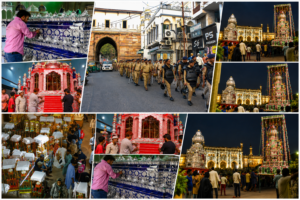
Muharram processions in India are marked by deep devotion, discipline, and centuries-old traditions that vary from region to region. In Lucknow, considered the heart of Shia culture in India, thousands participate in elaborate mourning processions that pass through historic imambaras and old city areas. The city’s observances, enriched by centuries of Awadhi heritage, include majlis gatherings, marsiya recitations, and symbolic processions that attract devotees from across the country.
In Hyderabad, home to one of India’s largest Shia communities, the historic Bibi Ka Alam procession is among the most prominent Muharram events. The procession, which dates back several centuries, draws vast crowds of mourners and visitors who gather to pay tribute to Imam Hussain and the martyrs of Karbala.
The national capital, Delhi, witnesses Muharram processions organized by various religious and community organizations. Traditional routes around Old Delhi, Kashmere Gate, and surrounding areas become focal points for mourners who participate in religious gatherings, recite elegies, and distribute food and water in memory of the sacrifices made at Karbala.
In Ahmedabad, Muharram processions reflect the city’s rich cultural diversity and communal harmony. Thousands of devotees participate in processions carrying alams and tazias, while religious congregations recount the events of Karbala and the teachings of Imam Hussain. The observances are marked by prayers, charitable activities, and messages of peace, sacrifice, and social justice, bringing together people from different sections of society.