
The Great Indians: Ela Bhatt
Ela Bhatt: The Gujarati Woman Who Empowered Working Women
Bilkul Online | Sunday Special
By Rafat Quadri (Editor)
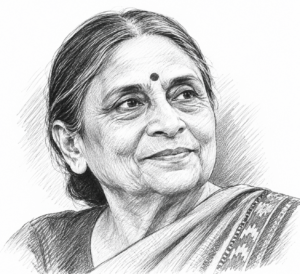
How one woman’s vision helped millions of self-employed women fight for dignity, financial independence and recognition.
In the bustling streets of Ahmedabad, thousands of women have long worked to support their families. They sell vegetables, stitch garments, roll incense sticks, collect waste, make handicrafts and perform countless other jobs that keep local economies moving. Yet, for many years, their contribution remained largely invisible in discussions about employment, workers’ rights and economic development.
One woman recognised their struggle and decided that these workers deserved more than sympathy. They deserved an organisation that would help them stand together, protect their livelihoods and become economically independent.
Her name was Ela Ramesh Bhatt, affectionately known as Elaben. A lawyer, social worker and Gandhian, she went on to establish the Self-Employed Women’s Association (SEWA), creating a lasting model of grassroots economic empowerment.
From Ahmedabad to a Life of Social Service
Ela Bhatt was born in Ahmedabad, Gujarat, on September 7, 1933. She grew up in an environment influenced by education and public service. She studied at M.T.B. College in Surat, earning a degree in English in 1952, and subsequently studied law at Sir L.A. Shah Law College in Ahmedabad.
Her legal education would eventually become an important instrument in her efforts to improve the lives of women workers.
After completing her studies, Bhatt began working with the Textile Labour Association (TLA), a trade union associated with Ahmedabad’s textile industry. In 1968, she became head of its women’s section, a role that brought her into close contact with women earning a living outside the organised factory system.
What she encountered changed the direction of her life.
The Women Who Worked but Remained Invisible
Many women in Ahmedabad worked tirelessly without the security enjoyed by workers in formal employment. They sold goods on the streets, stitched clothes at home, carried merchandise in wholesale markets and undertook other forms of manual labour.
Their earnings were often uncertain. Access to affordable credit was limited, while dependence on middlemen and moneylenders could make it difficult to retain a fair share of their income.
These women were workers and earners, but they frequently lacked the recognition, bargaining power and social protection associated with formal employment.
Bhatt understood that their problems could not be solved through isolated acts of charity. They needed a collective platform through which they could organise, negotiate and improve their own circumstances.
Her approach was influenced by Gandhian principles of self-reliance, dignity of labour, non-violence and collective action. She believed that women should be enabled to build their own futures rather than remain dependent on others.
SEWA: A Movement Takes Shape
In 1972, Ela Bhatt founded the Self-Employed Women’s Association (SEWA) in Ahmedabad. It began as a trade union for women working in the informal economy, including vendors, home-based workers and other self-employed earners.
The idea was straightforward but transformative: women who worked independently could become stronger by organising collectively.
SEWA sought to help its members improve their working conditions, secure better earnings, access financial services and gain recognition for their contribution to the economy.
The organisation grew rapidly. Within three years of its establishment, it had approximately 7,000 members. Over the following decades, it developed into a major organisation representing women workers across India.
SEWA’s significance extended beyond membership numbers. It offered women a platform to identify shared problems, develop solutions and participate more actively in decisions affecting their livelihoods.
Building Financial Independence Through SEWA Bank
One of Ela Bhatt’s most important contributions was recognising that employment alone could not guarantee financial security. Women also needed access to savings, credit and reliable financial services.
In 1974, SEWA established a cooperative bank to serve women who often found conventional banking difficult to access.
For women dependent on small daily earnings, access to affordable credit could make a meaningful difference. It could help them purchase raw materials, maintain a vending business, acquire equipment or avoid borrowing from moneylenders on unfavourable terms.
The cooperative approach also encouraged women to save, manage their finances and participate in an institution created to serve their needs.
This was an important part of Bhatt’s broader vision: economic empowerment required not only the opportunity to earn but also the ability to manage money, build assets and make independent financial decisions.
Beyond Wages: Dignity, Security and Collective Strength
Ela Bhatt’s work was never limited to increasing women’s earnings. She recognised that working women faced interconnected challenges involving healthcare, childcare, maternity, housing and the security of their livelihoods.
Through SEWA and its network of initiatives, women gained opportunities to organise cooperatives, share skills, improve production methods and explore collective purchasing and marketing.
Such arrangements helped members strengthen their bargaining position and reduce some of the disadvantages faced by individual workers operating alone.
The movement also challenged a narrow understanding of employment. A woman selling vegetables, making garments at home or collecting recyclable material was contributing to the economy, even if she did not receive a formal salary or work in an office or factory.
By bringing these workers together, Bhatt helped draw attention to the economic value of work that was frequently overlooked.
Recognition Beyond India’s Borders
Ela Bhatt’s contribution earned recognition in India and internationally.
In 1977, she received the Ramon Magsaysay Award for Community Leadership. In 1984, she received the Right Livelihood Award jointly with SEWA for helping home-based producers organise for their welfare and self-respect.
She was awarded the Padma Shri in 1985 and the Padma Bhushan in 1986. Her public service also included a term in the Rajya Sabha and work with organisations supporting women’s economic participation around the world.
These honours recognised more than an individual’s achievements. They brought international attention to the challenges faced by women working in the informal economy and to the possibilities created by collective organisation.
A Legacy That Continues to Inspire
Ela Bhatt passed away in Ahmedabad on November 2, 2022, at the age of 89. However, the movement she helped build continues to represent women workers and advance their economic and social interests.
Her legacy lies in a fundamental shift in perspective: women struggling to earn a livelihood should not be viewed merely as recipients of assistance. They are workers, entrepreneurs, producers and contributors to India’s economic life.
Her work also demonstrated that meaningful change does not always begin with large institutions or sweeping announcements. Sometimes, it starts by listening carefully to people whose problems have gone unnoticed and helping them organise to find solutions.
For countless women, the opportunity to save money, access credit, negotiate better terms or participate in a cooperative can represent a step towards greater control over their lives.
The Greatness of Ela Bhatt
Ela Bhatt did not seek to empower women by speaking on their behalf alone. She worked to create institutions through which women could speak for themselves, strengthen their livelihoods and claim greater control over their futures.
Her journey from a lawyer in Ahmedabad to an internationally recognised champion of self-employed women remains an important chapter in India’s story of social and economic development.
Ela Bhatt’s greatest achievement was helping working women recognise the strength they already possessed—and giving them the means to turn that strength into collective action.
Her life leaves behind a powerful lesson: when women gain the opportunity to organise, participate and become financially independent, the benefits can extend far beyond individual households to communities and the wider economy.
Note: We seek Sponsors for this column. Please connect with us at infobilkul@gmail.com