
The Great Indians: Dr. Bindeshwar Pathak
- Bilkul Online | Sunday Special
- By Rafat Quadri (Editor)
Dr. Bindeshwar Pathak: The Man Who Made Sanitation a Mission of Human Dignity
A visionary who transformed sanitation into a movement of dignity, equality and humanity
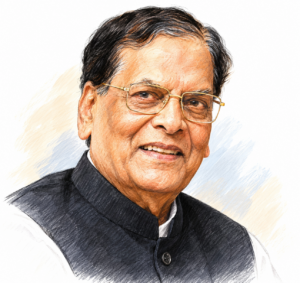
From challenging India’s centuries-old social discrimination to transforming sanitation practices, Dr. Bindeshwar Pathak devoted his life to a cause that many preferred to ignore.
Some people change society through politics, some through science, and others through social movements. Dr. Bindeshwar Pathak belonged to a rare category of people who combined innovation with compassion to address one of India’s most neglected social problems.
Remembered as the founder of Sulabh International, Pathak transformed sanitation from a basic public necessity into a movement for human dignity, equality and social reform.
His journey was not simply about building toilets. It was about challenging a system that had forced generations of people into the degrading occupation of manually cleaning human waste.
A Childhood That Shaped a Mission
Born on April 2, 1943, in Bihar, Bindeshwar Pathak grew up witnessing the deep-rooted caste discrimination prevalent in Indian society.
His early experiences left a lasting impression on him. He observed how people belonging to communities engaged in sanitation work were treated as socially inferior and denied basic human dignity.
After completing his education, he began working with the Bihar Gandhi Centenary Celebration Committee in 1968. His assignment took him closer to the lives of people engaged in manual scavenging.
There, he witnessed the harsh realities of a social practice that had continued for generations. He realised that sympathy alone could not change their circumstances. A practical solution was necessary to eliminate the degrading occupation.
Inspired by Mahatma Gandhi’s philosophy of cleanliness, equality and social justice, Pathak decided to dedicate his life to this mission.
The Birth of a Sanitation Revolution
In 1970, Pathak established Sulabh International Social Service Organisation, beginning a movement that would eventually reach communities across India.
His most significant contribution was the development and promotion of an affordable two-pit pour-flush toilet system.
The idea was simple but transformative. By replacing traditional dry latrines with hygienic toilet systems, households could reduce dependence on manual cleaning of human waste.
The journey, however, was far from easy.
In 1973, he received just Rs. 500 from an official of the Arrah municipality to construct two demonstration toilets. The successful demonstration helped him secure wider support for his initiative.
In 1974, Sulabh introduced its pay-and-use public toilet model in Patna, offering an affordable sanitation facility to people in urban areas.
What began with a small experiment gradually developed into a nationwide sanitation movement.
Beyond Toilets: Restoring Human Dignity
For Pathak, sanitation was never merely a technical or infrastructure issue.
He understood that the practice of manual scavenging was deeply connected to social discrimination, poverty and lack of opportunities.
Through Sulabh, he worked towards liberating people engaged in manual scavenging and helping them move towards alternative livelihoods.
The organisation promoted vocational training, education and rehabilitation initiatives to enable affected communities to pursue more dignified employment.
One of his important social initiatives involved helping women formerly engaged in manual scavenging in Alwar and Tonk, Rajasthan, move towards alternative occupations.
His approach demonstrated that social reform required more than ending an inhuman practice. It also required creating opportunities for those who had suffered under it.
A Vision That Earned Global Recognition
Dr. Pathak’s contribution extended beyond India.
His work attracted international attention for combining affordable sanitation technology with social reform and public health initiatives.
Among his many honours were:
- Padma Bhushan in 1991.
- Stockholm Water Prize in 2009.
- Gandhi Peace Prize, awarded to Sulabh International in 2016.
- Padma Vibhushan posthumously in 2024.
These recognitions reflected the significance of a mission that connected sanitation with public health, environmental sustainability and human rights.
His Legacy Lives On
Dr. Bindeshwar Pathak passed away on August 15, 2023, in New Delhi, at the age of 80.
His departure marked the end of an extraordinary personal journey, but the movement he created continues to carry forward his vision.
Today, his legacy is remembered not simply through sanitation facilities but through the larger idea that access to clean surroundings and dignified living conditions should never depend on a person’s caste, economic position or social background.
The Great Indian: A Lesson in Humanity
Dr. Bindeshwar Pathak’s life reminds us that some of the greatest revolutions do not begin in parliament or on the battlefield. They begin when an individual decides to challenge an injustice that society has accepted for generations.
He chose a subject that rarely attracted attention, worked against deeply entrenched social practices and demonstrated how technology could become an instrument of social transformation.
His greatest contribution was perhaps not the toilet technology he helped popularise, but the dignity and humanity he placed at the centre of India’s sanitation debate.
He did not merely work to clean India’s surroundings. He worked to change the way India treated some of its most marginalised people.
That is why Dr. Bindeshwar Pathak deserves a special place among the great Indians whose contributions continue to inspire generations.
Note: You can support us by sponsoring this column. Write at infobilkul@gmail.com Thank You